• Home
  • Books
  • Bio
  • Blog
  • Links
  • Events
  • Contact
Katie Van Ark
Passion on the page

Technique Tuesday: The Path to Writing is (Sadly Not) paved with M & M's

4/29/2014

 
Picture
I am insanely jealous of a co-worker who can't eat M&Ms because the candies give her migraines. If only that were my trouble. It's Tuesday, it's past time to post, and I've got nada - except a party sized bag of (peanut!) M&M's. Which is rapidly dwindling to a snack size bag, since of course getting my behind out of my chair and walking the nine steps to my kitchen pantry totally burns enough calories to eat another handful. Will someone please take the chocolate away from me?

I could blame this need for chocolate on my daughter's insistence that I read from Laura Ingalls Wilder's By The Shores of Silver Lake for bedtime stories tonight. I can't read that second chapter, where Laura's faithful dog, Jack, dies, without tearing up, and this time I choked through three of the pages, never managing to get it back together after the description of how the gray hair has spread from the dog's nose to the rest of its body. But the honest truth is that this craving hits every time I sit down to write. So apart from giving up writing or starting a twelve-step plan for this addiction, what's a writer to do?

  1. Appreciate gender differences and send zoned-in-on-the-hunt husband grocery shopping, ensuring that the chocolate (and anything else not on the list, including the toilet paper we desperately need) doesn't come home in the first place.
  2. Take a walk or a shower and let ideas mull, so I've got a starting point. Boot up computer beforehand and don't take anything to write with on the walk (and no using my daughter's bath crayons in the shower), so that I'll get my fingers on those keys as soon as I return.
  3. Invest in Extra's mint chocolate chip gum - a lot of it. (Does Costco carry this brand? If so, I may need a membership just for that!)
  4. Always leave my work the day before with a sticky note about where I plan to go next. Preferably detailed.
  5. Repeat, repeat, repeat.

So it's not twelve steps, but it's something. My name is Katie and it's been
three hundred and sixty-two words and twenty minutes since I put the rest of my M&M's down the garbage disposal. Happy writing and I'd love to hear about your own writing distractions and how you deal.
Technique Tuesday: Making Ordinary Characters Extraordinary

4/22/2014

 
I'm sorry, I lied. I promised an essay on my addiction to Phyllis Reynolds Naylor's Alice series but I'm finding (surprise, surprise!) that sometimes the VCFA writing experience is just like...writing. Sometimes things don't work and drastic changes are needed. While I will always love the Alice series, I found I could describe my addiction with a couple of paragraphs, which just won't cover the ten page essay I need to submit this month. New plan: The Year of Billy Miller versus The Stories Julian Tells. (It's a long one, click read more if you're up for seeing the match!)
Picture

The Year of Billy Miller  versus
The Stories
Julian Tells
:
Making the ordinary extraordinary

Picture

Read More

Technique Tuesday - Avoiding Infodumps In Fantasy Writing

4/15/2014

 
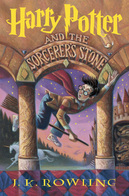
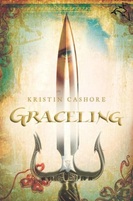
This week is a slight digression from my exploration of character, but as a side project (you know, when I'm procrastinating other writing I'm supposed to be doing...), I've been trying my hand at fantasy. I have a love-hate relationship with this genre, there's really no middle ground for me. Harry Potter? Love! Lord of the Rings? Movies yes, book no way.  Last month, I explored why in one of my critical essays for VCFA. (My apologies in advance to fans of Graceling - I toughed it out until chapter four because I so loved the idea of its premise but then I couldn't take any more. This essay is in no way intended to dismiss the capabilities of the author, who is a very talented writer and arguably better at many other aspects of writing than Rowling.) Here's why:
Picture


versus

Picture

Fantastical Infodumps and Where Not To Find Them

The map at the beginning should have stopped me right there. Attention, now entering Fantasyland! Warning, worldbuilding ahead! But I am a Potter fan who longs to go to Hogwarts. I like fantasy worlds and the premise of Kristin Cashore's Graceling intrigued me. Then I encountered too much information about Graces in the first chapter. When the second chapter began, surely enough, with “It was a land of seven kingdoms” (Cashore 17), I was done.

No one would argue that fantasy could be done without worldbuilding, it is as essential to the fantasy genre as happily ever after is to romance. But what is the best way to transfer knowledge of the fantastical world to the reader? Fantasy author Elizabeth Bear states that “oft-reviled, the infodump used artfully is nevertheless one of the best means of delivering information” (Bear 199). Yet personally, the mere hint of an infodump leaves me saying “screw the dragon ride” and using my own two feet to run from Fantasyland as fast as I can. Was this the determining factor for me in my love-hate relationship with fantasy, how artfully infodumps are used?

As I was never able to finish J.R.R. Tolkien's The Lord of the Rings (yeah, it's a map thing), I decide to examine the second most popular fantasy novel of all time, J.K. Rowling's Harry Potter and the Sorcerer's Stone, the story of an orphaned boy who learns he is a wizard.

Rowling artfully avoids any worldbuilding infodumps in her first chapter, choosing instead to provide back story on the Dursley family. Delivered in a fashion similar to the work of Roald Dahl, this serves two purposes. It distracts from the magical shimmers of the wizarding world already being revealed - “None of them noticed a large, tawny owl flutter past the window” (Rowling 2) – and also puts the reader in a position where to disbelieve in the wizarding world means siding with Team Dursley. Anyone up for membership in the most boring tie club? Anyone? Anyone?

Rowling repeats this trick in her second chapter, using a short series of three events from Harry's past to show that, well, there's something about Harry. His hair mysteriously grows back after a bad haircut, a revolting hand-me-down sweater somehow shrinks in the laundry, and he manages to jump onto the roof at school when being bullied. Additionally, “[S]ometimes he thought (or maybe hoped) that strangers in the street seemed to know him” (Rowling 30). This could be a massive infodump of observations about these strangers, who are of course wizards, yet Rowling refrains from explaining, merely noting that the people have odd fashion tastes.

When mysterious letters begin appearing for Harry and follow him and the Dursleys even out to an island in the middle of a stormy sea, Rowling still does not submit to an info-dump. Instead, she reveals glimmers of Harry's past through an argument the giant Hagrid has with the Dursleys, raising more questions than she answers throughout two pages of escalating fighting that builds to this:

“STOP! I FORBID YOU!” yelled Uncle Vernon in panic.
Aunt Petunia gave a gasp of horror.
“Ah, go boil yer heads, both of yeh,” said Hagrid. “Harry – yer a wizard.” (Rowling 50)

Though some of Rowling's other writing in this excerpt could be questioned, her suppression of info-dumping is admirable. Harry, you're a wizard.

While it does fall on Hagrid to explain a bit of Harry's past, Rowling again avoids an info-dump, focusing the story on Voldemort over the magical world, raising as many new questions as she answers old, and skillfully weaving all of this into dialogue with Hagrid:

[Hagrid sat down, stared into the fire for a few seconds, and then said, “It begins, I suppose, with – with a person called – but it's incredible yeh don't know his name, everyone in our world knows–”
“Who?” [Harry answering]
“Well – I don't like saying the name if I can help it. No one does.”
“Why not?”
“Gulpin' gargoyles, Harry, people are still scared. Blimey, this is difficult. See there was this wizard who went...bad. As bad as you could go. Worse. Worse than worse. His name was...”
Hagrid gulped, but no words came out.
“Could you write it down?” Harry suggested.
“Nah – can't spell it...” (Rowling 54)

Rowling continues this scene to basically establish that no one knows why Voldemort went to Harry's house or why Harry survived or what exactly happened to Voldemort, including if he is even really gone. A far cry from an explanation of the magical world, this is essentially the opposite of an infodump. Rowling uses a similar reverse infodump in a later scene where Harry meets Draco Malfoy as the two are getting measured for their school robes:

“Have you got your own broom?” the boy went on.
“No,” said Harry.
“Play Quidditch at all?”
“No,” Harry said again, wondering what on earth Quidditch could be.
“I do – Father says it's a crime if I'm not picked to play for my House, and I must say, I agree. Know what House you'll be in yet?”
“No,” said Harry, feeling more stupid by the minute.
“Well, no one really knows until they get there, do they, but I know I'll be in Slytherin, all our family have been – imagine being in Hufflepuff, I think I'd leave, wouldn't you?” (Rowling 77)

Instead of telling us about the magical world, Rowling lets us explore it with Harry as he buys his school supplies in Diagon Alley and magnifies the extent of it through the questions raised by her reverse infodumps.

In contrast, here is an excerpt from the second chapter of Graceling:

The kings of Wester, Nander, and Estill – they were the source of most of the trouble. They were cast from the same hotheaded mold, all ambitious, all envious. All thoughtless and heartless and inconstant. King Birn of Wester and King Drowden of Nander might form an alliance and pummel Estill's army on the northern borders, but Wester and Nander could never work together for long. Suddenly one would offend the other, and Wester and Nander would become enemies again, and Estill would join Nander to pound Wester. (Cashore 18)

This infodump tells about the world but doesn't develop character, advance the plot, or raise questions for me as a reader, apart from how will I keep all these kings straight?

Rowling does use one small paragraph that could be argued as an infodump at Ollivander's wand shop, where Mr. Ollivander says:

“Every Ollivander wand has a core of a powerful magical substance, Mr. Potter. We use unicorn hairs, phoenix tail feathers, and the heartstrings of dragons. No two Ollivander wands are the same, just as no two unicorns, dragons, or phoenixes are quite the same. And of course, you will never get such good results with another wizard's wand.” (Rowling 84)

With Mr. Ollivander's amazing memory about every wand he's ever sold, however, even this paragraph seems more about salesmanship than worldbuilding. A similar very short paragraph much later in the novel allows Harry to quote off some Quidditch trivia but is unnoticeable to the casual observer as Harry was reading a school library book on the subject, a natural activity for a student at any school.

Mostly, Rowling writes confidently about her world. No explaining that ghosts exist, they simply stream through the wall. She allows magical events to unfold as any other event, such as the song of the Sorting Hat: “A rip near the brim opened wide like a mouth – and the hat began to sing” (Rowling 117). No explanation about how this occurs also conveniently prevents questioning of the magic involved.

It is not until halfway through the novel when Harry begins classes at Hogwarts that Rowling succumbs to a couple of pages of infodump, describing the tricky staircases at Hogwarts, the characters of Peeves the poltergeist and Filch the caretaker, and the various classes required of first years. And apart from the first couple of paragraphs, this is not so much worldbuilding as a summary of Harry's first few days of class. Judging by the length and popularity of Rowling's ensuing books in the series, this summary could have been eliminated entirely and given over to active scenes following Harry through those first classes just as the reader has followed him thus far on his journey into the magical world.

Rowling's novel stands apart from many fantasy novels in the fact that her main character, Harry, is, like the reader, new to her world. This begs the question as to whether complete exclusion of infodumps would work for all fantasy novels. For example, the scene in which Quidditch captain Oliver Wood explains the game to Harry would not have been natural nor believable if Harry were not new to the magical world himself. But in avoiding the infodumps stereotypical of her genre, Rowling merged fantasy and reality and this may be what brought many new fans to the fantasy fold. While infodumps continue in many fantasy novels, mine won't have a map.

Works Cited

Bear, Elizabeth. “Tactics of Wordbuilding.” Writer's Workshop of Science Fiction & Fantasy. Ed. Michael Knost. Lexington: Seventh Star Press, 2013. 193-200. Print.

Cashore, Kristin. Graceling. New York: Graphia, 2008. Print.

Rowling, J.K. Harry Potter and the Sorcerer's Stone. New York: Scholastic, 1997. Print.

Technique Tuesday: Raising the Stakes

4/1/2014

 
Picture
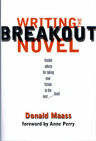
When do all my brilliant new ideas come to me? When I have a bunch of other things I need to do, of course! Luckily time is always game for another round of Chicken. (VCFA packet due in five days...) So here we go on another round with a potential new WIP and Donald Maass's WRITING THE BREAKOUT NOVEL.

In chapter three, Maass discusses stakes. It's a scary question to think about, but if your character doesn't get what he or she wants, then so what? In my premise above, what if Kylie doesn't get to go to the championships, then so what? What is lost, besides her own personal dream?

Maass identifies three types of stakes: personal (for the character), public, and the author's own stakes, his or her reason for writing the novel. Writers should seek to elevate all three. I can up Kylie's personal stakes by meshing her desire to win with a desire to belong to the world of skating, a world that generally requires good looks and high finances to inhabit. If Kylie doesn't win, she's not only losing the opportunity but she's also proving that she doesn't belong in this world, that people who are overweight or poor can't skate. She is losing her ability to believe in herself, to believe that her dreams are reachable no matter what her background is. By incorporating the work for gay rights, I've raised the public stakes as well and conflicted them with Kylie's personal stakes. If Kylie doesn't take a stand in order to win, she thus undermines the work of those who are fighting for her acceptance. And this is part of my personal reason for writing this novel as well. I have close friends and family members who are gay and have shared their struggles with their feelings and coming out with me. Telling Kylie's story is a way for me to share pieces of their stories.

So what are the stakes in YOUR story? Why does it matter to your characters, you, and the rest of the world?

What to Read This Weekend: A Few Fave Craft Books

3/22/2014

 
If you're reading this post, you've probably at least seen the question before about what three books you'd want to take with you if you were to be stranded on a desert island. Though there are many, many authors I would miss, if I could only take three books I would take these three craft books so I could write myself a lifetime of stories. Egotistical? Perhaps, but these three books are worth it.

Writing the Breakout Novel, by Donald Maass

Picture
For developing great premises, I love Donald Maass's Writing the Breakout Novel. This book also taught me how to raise the stakes, incorporate psychology of place and social trends, and to develop my themes more fully.

“In one-on-one meetings at writers conferences, I can usually stop a story pitch dead in its tracks by interjecting the following: 'Hold on, your protagonist wants to [insert goal here}.], but let me ask you this, if he is not successful, so what?'” (Maass 60)

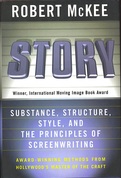
Story: Substance, Structure, Style, and the Principles of Screenwriting By Robert McKee

Picture
Robert McKee's Story: Substance, Structure, Style, and the Principles of Screenwriting  is the book I wish I had seen in high school. Though I learned to basics of character, setting, and genre in school, McKee explains the relationships between these and other essential elements. “A beautifully told story is a symphonic unity in which structure, setting, character, genre, and idea meld seamlessly. To find their harmony, the writer must study the elements of story as if they were instruments of an orchestra – first separately, then in concert.” (McKee 29) Though the book was written for screenwriters, it is very applicable to novels. This is the book I turn to when developing plot lines and character arcs, the book that taught me about beats, writing a scene, turning points and climax.

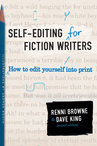
Self-Editing for Fiction Writers, By Renni Browne and Dave King

Picture
Once I've developed a strong premise and have an idea of how the character arcs and plot structure will work, I write the first draft. Then it's time for the last book on my list: Self-Editing for Fiction Writers: How to Edit Yourself into Print, by Renni Browne and Dave King. “You can drop your amateurish look and give your writing a professional edge.” (Browne & King 4)  This is the book that I use to polish my drafts. With checklists at the end of each chapter, it guides writers to check for showing instead of telling, avoiding backstory dumps and tangents, using the most effective point of view, creating authentic sounding dialogue and much, much more.

Check back on future Technique Tuesdays for posts where I apply Donald Maass's Breakout Novel techniques on a potential new WIP!

What to Read this Weekend: For World-Building & Voice

3/14/2014

 
I am proud to belong to a fantastic SCBWI critique group called Four Ladies and a Gent, and my fellow members helped make Pairing Up what it is today. I knew the novel was ready for submission when our gent, a writer of MG fantasy and sci-fi, confessed that he couldn't believe I'd sold him on a figure skating romance. I think well-written stories can reach far beyond their intended audiences, and with that in mind I have two recommendations for this weekend with premises I never thought I'd like.

I must confess that I am not a horse person. My apologies to all of you who are, but please don't stop reading because I'm about to recommend a couple of great horse books. If, like me, you just want to get out of this "stinking fresh country air" (quote from my four-year-old self), please also keep reading because these amazing authors sold me on their novels despite the fact that they're both about horses.

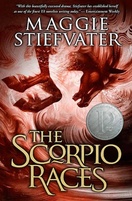
The Scorpio Races, by Maggie Stiefvater

Picture
Nineteen-year-old Sean Kendrick is in love with water horses. It doesn't matter that one killed his father, that the mythical creatures brought to life in this novel would gladly eat their riders for lunch, that they're monsters. Puck (Kate) O'Connolly is terrified of these beasts who made her an orphan, yet through the novel she grows to love them and Sean.

Stiefvater made me love these monstrous horses as well, with a world so seamlessly built into her story that I'm going to have to write an entire critical essay this month on how she did it. A fantasy without information dumps? A rare creature indeed, and I'm on a quest to find more. You don't have to like horses OR fantasy to LOVE The Scorpio Races, Stiefvater will sell you on her story either way.

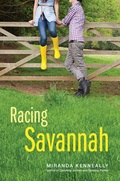
Racing Savannah, by Miranda Kenneally

Picture
This is a light-hearted romance and not a fantasy at all, yet Kenneally uses her character's voice to show her world. I am a huge fan of Kenneally's use of landscape to flavor her character's voices and this book didn't fail to please, heading off to the races right out of the starting gate. Having read Kenneally's previous books, I also enjoyed the skillful way in which “where-are-they-now” scenes with characters from prior works were woven together with Savannah's story.

Happy reading!

What to Read This Weekend - And a Contest!

3/7/2014

 
If you want to be a big goldfish, you can't swim in a small pond. My coach liked to apply this saying to the skating world as well. Look at Olympic gold ice dancers Meryl Davis and Charlie White - they train with the silver medalists Tessa Virtue and Scott Moir. There's a lot to be said for surrounding yourself with talent, and I like to think about writing the same way. It's part of why I'm studying at VCFA. Fortunately for writing, you can surround yourself with talent without freezing your butt off. Just curl up in your favorite chair with a good book. If you're looking for a book to up the size of your pond, here are a couple of suggestions...

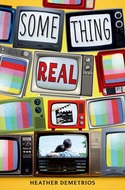
Something Real, by Heather Demetrios

Picture
For an example of a great premise:

So often we see the story of the adopted child who doesn't feel like he or she fits in, but this book flipped that premise by taking the perspective of a couple's one biological child among twelve adopted children. Heightening the already amplified teenage angst of this situation, Bonnie(TM) gets to have her worst moments carefully edited into an hour of prime time television – her family is the cast of the reality show Baker's Dozen. An interesting cast as well as the inclusion of e-mails, web sites, tabloid articles, and TV scripts makes this book really something.

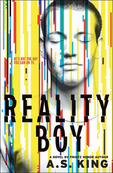
Reality Boy, By A.S.King

Picture


For an example of an excellent hook:

Breaking the rules, this book begins with a back story prologue. And, to use language of the main character, Gerald, it's so damn interesting readers won't give a shit. Lesson learned: although everyone poops, even young adults (and adults!) are fascinated by it.


You could win a copy of Something Real - enter the Pairing Up trivia contest! By entering the trivia contest, you are certifying that you are at least 13 years old. One entry per e-mail address. Winner will be contacted via e-mail to arrange prize delivery. Please note that I can only mail prizes to US addresses. To win, you must be the first to guess the original names of Gabe and Maddy in Pairing Up. If no one has guessed both correctly by my next Technique Tuesday post, then the first person to have guessed Gabe's name correctly is the winner. Fortunately, I'm not Rumpelstiltskin so I'm giving you multiple choice options. :-) CONTEST CLOSED - CONGRATULATIONS TO WENDY!

    Guess the Original Names of Gabe and Maddy From Pairing Up!

Submit

The Curly Red Hair is Hopeless but the Tension Can Be Tamed: An Analysis of the Tender and Tragic in Eleanor & Park

3/4/2014

 
I'm currently working on revising Kiss and Cry - yes, actually revising and not procrastinating at the moment, see previous post - and one of my problem areas with the novel is, well, too much crying. (I suppose I could simply add more kissing, but I wasn't intending to write a Fifty Shades knock-off for the YA set.) So what's my mission for this Technique Tuesday? As Donkey suggests in Shrek, "to try a little tenderness." (The chicks love that romantic crap!) No Princess Fiona here, but this week I examined another red-haired heroine: Eleanor.
Picture
Eleanor & Park, by Rainbow Rowell, is the story of two misfits. Eleanor lives with a stepfather whose goal in life seems to be making her miserable, shares a room with her four brothers and sisters in a house with no door on the bathroom, and is tormented by her classmates. Park falls short, both physically and otherwise, of his father's expectations. Yet Eleanor & Park lives up to the “sexy, smart, tender romance” it is proclaimed to be in by Gayle Foreman's cover review. By strategically placing tender, smart, and sexy moments in the otherwise tragic lives of her characters, Rowell both tames tension and amplifies the effect of these hopeful moments to leave readers with the sense that love can uncross the stars.

The novel opens with a short prologue that is actually a reprint of part of a scene that occurs much later in the book, where Park mourns the loss of Eleanor: “Standing behind him until he turned his head. Lying next to him just before he woke up. Making everyone else seem drabber and flatter and never good enough” (Rowell 1). Both tragic and tender, this scene sets the tone for the novel and provides the tenderness readers need to sustain them through Eleanor and Park's first meeting. A far cry from love at first sight, Park describes Eleanor using the words big, awkward, and mess. He compares her to a scarecrow. When he grudgingly allows her space on his seat, his first words to her are “Jesus-fuck...just sit down” (Rowell 9). Quite the heartthrob, and Eleanor's no better, silently thinking of Park as “that stupid Asian kid” (Rowell 12). Yet the prologue gives readers a sense that there is so much more to come, enough to sustain us through Chapter 6, when Eleanor finally thinks that Park at least has “cool shoes” (Rowell 24) and Park admits it feels “wrong to sit next to somebody every day and not talk to her” (Rowell 24).

Park and Eleanor slowly begin to interact with each other after Park realizes that Eleanor is reading his comics along with him on the bus and notices her eyes:

The new girl's eyes were darker than his mom's, really dark, almost like holes in her face. That made it sound bad, but it wasn't. It might even be the best thing about her. It kind of reminded Park of the way artists draw Jean Grey sometimes when she's using her telepathy, with her eyes all blacked out and alien. (Rowell 33-34)

Park still doesn't say anything to Eleanor, but he begins holding his comics to make it easier for her to read along with him, begins saving them only to read on the bus so she doesn't miss sections, even begins bringing comics to silently lend to her. These smallest gestures of kindness are amplified because Rowell surrounds them with the depiction of Eleanor's crappy home life, where her creepy stepfather has torn down even the sheet that was over the bathroom doorway, and the back story reveal of how Eleanor had to live with another family for months, which was “Terrible. Lonely. [But still b]etter than here” (Rowell 36).

Though Eleanor's home life is awful, Rowell doesn't make her a mere damsel in distress. She establishes Eleanor as intelligent and funny by interjecting scenes such as this one from an English class discussion:

[Shakespeare's] so obviously making fun of them...Romeo and Juliet are just two rich kids who've always gotten every little thing they want. And now, they think they want each other...They don't even know each other...It was 'Oh my God, he's so cute' at first sight. If Shakespeare wanted you to believe they were in love, he wouldn't tell you in almost the very first scene that Romeo was so hung up on Rosaline...It's Shakespeare making fun of love. (Rowell 44)

Wow. This girl is so smart, and I want to get to know her better.

So does Park. They begin really talking on the bus, with playful banter including witty one-liners from Eleanor such as “The least boring Batman story ever, huh? Does Batman raise both eyebrows?” (Rowell 60). Rowell writes, “They agreed about everything important and argued about everything else. And that was good, too, because whenever they argued, Eleanor could always crack Park up” (Rowell 64). These smart scenes diffuse nights at home where Eleanor comforts her siblings as her stepfather rages and attacks their mother in the next room, where Eleanor wakes up smelling like pee because her brother wet the bed and heads off for the bus with only the scent of her stepfather's bacon for breakfast.

Having established a tender, smart foundation for the blossoming romance between her two main characters, Rowell begins to include the first sexual scenes between Eleanor and Park. It doesn't take much. Combined with the tragedy that surrounds them, these scenes are amplified to the point where Rowell is able to sustain Eleanor and Park holding hands for the first time over two whole pages – and it's extremely hot. Not even beginning with actual hand-holding, Park first is simply holding the old silk scarf Eleanor had tied around her wrist. When he finally “slid the silk and his fingers into her open palm...Eleanor disintegrated” (Rowell 71). After, Eleanor wonders: “How could it be possible that there were that many nerve endings all in one place? And were they always there , or did they just flip on whenever they felt like it? Because, if they were always there, how did she manage to turn doorknobs without fainting?” (Rowell 73). Set against the tragic, the power of this scene is completely credible.

When a girl named Tina (who “went” with Park in sixth grade) and some other mean classmates dump Eleanor's clothes in the toilet during gym class, Park gets an accidental view of Eleanor in her tight gym suit. Rowell twists the tragic into sexy by making Park aroused: “How could he even look at her now? He wouldn't be able to. Not without stripping her down to her gym suit. Without thinking about that long white zipper” (Rowell 245). Park's next meeting with Eleanor results in six steamy pages of make-out bliss, at the end of which he confesses his gym suit turn-on. Rowell sneaks in a classic bit of comic relief with Eleanor's smart response: “Tina would be so pissed” (Rowell 254).

Through the inclusion of these and other tender, smart, and sexy scenes, Rowell sets readers up for the book's climax and conclusion. When Eleanor's stepfather finds out about Park, he is livid. Eleanor has to leave home again and we know she can never come back. Her last scenes with Park, as he drives her to her uncle's house hours away, are filled with the tragic and tender as we know they have to say good-bye. Unable to express her emotions for Park in words, Eleanor doesn't answer his letters. But after all these two have been through, this can't be the end and finally, on the last page, there's a postcard from Eleanor. “It filled his head with song lyrics...just three words long” (325). Rowell never says what those three words are, but we know they're the three that Eleanor never managed to tell Park. Just that one sentence and we know these star-crossed lovers get a happily ever after. Tender and tragic, smart and sad, sexy and stinging: Eleanor & Park is a combination as timeless as sweet and sour sauce that leaves readers wanting to come back for seconds.

Is your work in progress too sweet or too sour? I hope this provides some food for thought.
Also, check back this weekend for the debut of a new blog feature: "What to Read this Weekend." I'll be sharing a pair of YA books each Friday that I'm reading for inspiration, annotated with why you might check them out to improve your own craft. Included with the first "What to Read this Weekend" post will be the promised quiz to guess Gabe's original name in Pairing Up to win a hardcover copy of Something Real, fellow VCFA student Heather Demetrios's fantastic debut novel.

Works Cited:

Rowell, Rainbow. Eleanor & Park. New York: St. Martin's Griffin, 2013. Print.

On Procrastination & Revision

2/25/2014

 
Picture
Tonight I'm procrastinating. I am writing, so it's okay, right? Except I'm not writing what I'm supposed to be writing.

I excel at procrastination and, in a masochistic sort of way, enjoy deadlines. Particularly those that hit right on the sweet spot of the blade, that give me the semblance of time for procrastination. They're a great way to get my whole house cleaned, the laundry done, and all the errands run as I engage time in a game of chicken. Sometimes I even get to organize my closet.

I should be working on my next critical essay for Vermont, which I'd hoped to post tonight. I've been re-reading Eleanor & Park, my assignment an examination of how Rainbow Rowell diffuses tension. Love-love-love this book and would just like to say that Rowell is a genius. This is going to be a great essay, but not tonight. Why? I've run into something with which, like many authors, I have a love-hate relationship, that dreaded r-word: revision.

For me revision is like labor, as in the childbirth kind. Something awesome is coming – after painful, hard work. I've written a pile of notes on Eleanor & Park but the essay is definitely at the “shitty first draft” stage. I'm through that first easy stage of labor and things are starting to get uncomfortable. I see tired on the horizon. I'm unsure of exactly what needs to happen when and how it will all sort out. And I can see the full-on hair-grabbing frustration stage coming, the “I swear I am never going to write again, I can't do this” stage. Tonight I'm too tired to push through. I want an epidural.

My girls came too fast for me to ever experience this medical miracle and for those who'd like to stick me right now, almost giving birth in an elevator is a whole different kind of scary you can be glad you never experienced. But for writing, I like to think of feedback as the best way to ease revision pains. Feedback provides a sense of direction, a set of steps to tick off. It's a countdown through the contraction, at least until the next wave of revising.

I don't get an epidural or feedback tonight, so I'm settling for some laughter about revising. I discovered Shannon Renee's tumblr today: http://writingelements.tumblr.com/. (Okay, yeah, sometimes I avoid cleaning house and use the Internet to procrastinate. Especially convenient when I've gotten to the stage where I really do need to sit down at the computer.) I love the picture of Kermit, captioned “My face when I read my old writing.”

For kicks and giggles, I thought I'd post an excerpt from my original draft of Pairing Up, which went through over twenty revisions before its appearance on Swoon Reads. (For YA/NA authors looking for feedback, check out the site. With its five heart rating and comment system, it's like getting your Amazon reviews before you hit Amazon – when you can still revise and do something about them! If your work is already really polished, the editors may pick you for their next list. Unlike the slush pile, though, you can get feedback from other writers and readers on the site, then revise and submit again.) Here's how Pairing Up began in my original draft:

Madelyn Spier smiled at the photograph hanging on the Smiths’ refrigerator. She never tired of looking at it, even though she had an identical copy on the bulletin board in her bedroom, even though she could close her eyes and picture every detail. The two preschoolers in the picture laughed back at her as they marched hand in hand down the ice, outfitted in a rainbow of winter apparel. It might have been a study of contrasts: the little girl petite and brunette, the boy tall and blond, the freshly resurfaced ice against the boards all dirty and scuffed by hockey pucks. The children’s expressions, though, were exactly the same. This, they seemed to say, is true happiness. She agreed.

Twelve years later and she loved the ice every bit as much as she had on that first outing. There was nothing else quite like the sensation of speeding down a pristine sheet of ice, of letting everything go and soaring into the air. Of finding the perfect center in a spin and feeling as though you could circle forever. She loved the feeling of a wind she’d created in her hair, the certainty of her blades beneath her, even the smell of the ice. With up to seventeen hours of practice a week, fifty-two weeks in a year, and twelve years of skating, Maddy had spent over ten thousand hours honing her craft. And she still couldn’t wait for the chance to do it again. “Shake a leg, Gabe,” she called. “We’re going to be late!”

Wow. I just read that over again and I know my face looks way worse than Kermit's face on Shannon Renee's site. Can anyone say back story dump? And I did not write “shake a leg,” did I? I'll also confess that in the beginning the characters weren't named Maddy and Gabe, either. Their original names are so embarrassing I'm not even ready to share them at this point. (Maybe one day I'll do a quiz to see if anyone can guess them. Here's a clue: a reader asked me if I'd gotten them from The Music Man. Ooh, definitely feel a quiz coming on. Check back, because I've been dying to share the Something Real love and I've got a copy of Heather Demetrios's new novel to give away...)

If you haven't read Pairing Up yet, check out what it's become here. Revision: it's worth it. Now back to revising that essay. Tomorrow. :-)

"Shitty Sports Metaphor Language" - Up Your Character's Voice Game

2/18/2014

 
Picture
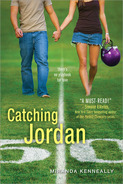
Last week for Technique Tuesday, I mentioned some of my favorite mentor texts. Miranda Kenneally's Catching Jordan made the swoon list for laughs but I also adore the voice of her main character, Jordan Woods. It's often said that if you want to talk the talk, you've got to walk the walk. If we want our readers to suspend disbelief and immerse themselves in our stories, we need to make our characters' walk believable through their talk. In Catching Jordan, a novel about a female high school quarterback who falls in love with a new teammate even as he rivals for her position, Kenneally uses sports similes and metaphors to show how fully immersed her protagonist Jordan Woods is in the world of football, thus building a credible world and characters.

Though the descriptions of football practices and games are realistic and well-researched, I found myself believing Jordan as a character more when she compared things normally unrelated to the sport to “football, dominator of fall – football, love of my life” (1). In Jordan's world, her friends don't make out, they kiss “as if winning the state championship depends on it” (6). The grass isn't just green, it's like “lying on Astroturf, only without the rug burns” (128). Instead of saying “after dinner,” Jordan says “before Monday Night Football” (187). Speaking “football” shows how close to her heart Jordan holds her beloved sport and quarterback abilities; football is always on her mind.

The comparisons extend beyond descriptions of events and setting to express Jordan's deepest emotions. Her emptiness is “a playbook without plays” (173). When she is angry at her father, really, really angry, she tells us, “And though it's sacrilege, I'm considering smashing his Joe Montana autographed picture” (167). Describing awe, she writes in her journal, “I thought I'd died and gone to the Super Bowl (as starting QB)” (38). Some of these comparisons may sound cheesy out of context or even in context, but the sincerity with which they are used only further drives the message home. Jordan loves all things football, even her best friend and long-time teammate Sam Henry's Cracker Jacks football charm prize that he wears religiously on a chain around his neck.

Other characters besides Jordan also speak “football.” When Jordan and Henry (Sam Henry goes by his last name) pair up for a class project to take care of an electronic baby, Jordan worries what they will do with the doll during practice. Henry says, “That's what grandparents and the junior varsity players are for” (105). JJ, another teammate, comments “Should I leave you two alone so you can make out with a football?” (189). Dialog examples such as these two bring credibility to the other members of Jordan's championship team.

In the case of cheerleaders Carrie and Marie, football knowledge expressed through comments such as “I loved your flea-flicker play the other night” (204) opens Jordan up to trust the two as friends and confidantes even though she previously referred to cheerleaders as “idiotic” (3). We know Jordan likes Carrie when Carrie says “Now go get 'em,” (122) and Jordan notes that Carrie sounds “just like Coach when he gives us pep talks before games” (122) and is “surprised she doesn't slap my ass too” (122).

The first time Jordan meets her new team mate, gorgeous Ty Green, she's taken aback by his seeming lack of dedication to the sport. “A Texas football player who doesn't kneel down and pray to the Cowboys every Sunday?” (21). Ty turns out to be not only handsome but a talented quarterback, Jordan's equal on the field. Even as Jordan determines that she cannot date a teammate and remain focused on her dreams of playing college ball for Alabama, it doesn't take long for her to become smitten, “wanting to tackle Ty in the guys' locker room” (32). She attempts to hide her feelings, later saying “I drew a bunch of Xs and Os, which aren't hugs and kisses, but offensive plays from the team playbook” (37), but hiding in a potting shed with her journal, she isn't fooling even herself.

When Jordan injures her knee during the state championship game near the end of the book, we feel her pain intensely because we know how much football means to her. And of course, her thoughts center on “My ACL? Oh God...my future...” (249). When Henry accompanies her to the ER but her boyfriend Ty stops for flowers, Jordan realizes that “maybe my life needs some physical therapy too” (254). Later, upon hearing that her knee injury is just a sprain, she writes in her journal, “I feel like I've been given a free play” (256).

Kenneally masterfully twists this language of sports metaphors when she has Jordan try to discuss her feelings with Henry using a sports (albeit baseball) analogy, only to be told by Henry that he doesn't “speak Shitty Sports Metaphor Language” (162). Henry thus forces Jordan to confront her feelings for him directly, making the moment more powerful.

As with all writing tools, simile and metaphor may be overdone, but for sports novels I feel the grass is greener on the Astroturf side. Kenneally's use of sports simile and metaphor challenged me to think about how I could use comparisons from the world of figure skating in my own novel and I also saw applications for other hobbies that are important parts of characters' lives. Writing about a piano student? Metaphors may be key. An artist? Brush up your novel with similes. Until then, “I'm taking the ball and running with it” (256).

Works Cited:

Kenneally, Miranda. Catching Jordan. Naperville, IL: Sourcebooks Fire, 2011.

<<Previous
Forward>>

    Reflections on Writing

    Picture
    I love few things better than a bottomless to-read list of books and firmly believe the world has room for all the stories we want to share. This blog is intended to provide resources and spark discussion about improving writing. Opinions are my own and not intended to discredit anyone else's work, only to open conversation. Thanks for reading!

    Archives

    September 2022
    August 2022
    July 2022
    March 2020
    January 2018
    July 2017
    April 2017
    August 2016
    October 2015
    September 2015
    April 2015
    February 2015
    January 2015
    December 2014
    November 2014
    October 2014
    September 2014
    August 2014
    July 2014
    June 2014
    May 2014
    April 2014
    March 2014
    February 2014
    January 2014

    Categories

    All
    Blog Hop
    Character
    Craft
    Craft Analysis
    Description
    Donald Maass
    Fantasy
    Figure Skating Championships
    Heather Demetrios
    Interview
    Jennifer Comeaux
    Jenny Elliott
    LGBT
    NaNoWriMo
    Premise
    Presentation Skills
    Rainbow Rowell
    Setting
    Skating
    Stakes
    Voice
    What To Read This Weekend
    World Building
    World-building
    Writing
    YA

    RSS Feed

Powered by Create your own unique website with customizable templates.
Photos from diongillard, BLMOregon, ebbandflowphotography, French Tart, photographerglen, York College ISLGP, apalca, VinothChandar, 4Neus, ♔ Georgie R, anokarina, martinak15, photosteve101, revjett, Skley, Peter Werkman (www.peterwerkman.nl), Rusty Darbonne, JoshArdle Photography, ashraful kadir, Guillaume Paumier, ChrisL_AK, ryantron., koadmunkee, Jim Larrison, JMR_Photography, ulazarosa, jfingas, Hamed Saber, kyz